Old Technology, New Tricks: NSF Grants Fuel Widener’s AI Radar Research

Radar may be old technology, but artificial intelligence is providing new ways to use it.
The scientific foundations of radar date back to the late 19th century, with practical radar systems emerging in the early 20th century. Radar uses reflected radio waves to detect objects and determine their distance and speed.
Associate Professor Ali Hamza and his research team are developing artificial intelligence techniques to improve how radar systems process signals, adapt to changing environments and overcome interference. His team’s work is funded by a $200,000 grant from the National Science Foundation, or NSF, awarded to early-career researchers to help establish their research programs.
“We were fortunate to receive these NSF grants at such an important time. Their support has allowed us to accelerate our research on AI-powered radar systems while creating valuable research opportunities for our students,” said Hamza.
The team’s research focuses on developing AI-powered radar systems that can intelligently select and configure antennas to improve signal detection while reducing interference. By making radar systems more adaptive and efficient, the researchers aim to improve their performance in complex and changing environments. This could benefit self-driving cars, where radar can be more reliable than a camera in low light or fog, and far cheaper than the LiDAR technology currently used in those vehicles. The technology could also support privacy-preserving monitoring of older adults by detecting their movements without capturing identifiable images.
Radar can do more than track movement. It can also monitor breathing and heart rate, measure how long someone has stayed in bed and potentially analyze changes in gait that may indicate an increased risk of falling. It has also been placed inside vehicles to detect if a driver is falling asleep.
“The radar can sense what people are doing without intruding on their privacy, which is why I think this research is so important,” said Camryn Walshaw, a graduate student in Widener’s four-plus-one electrical engineering program who has worked on the project.
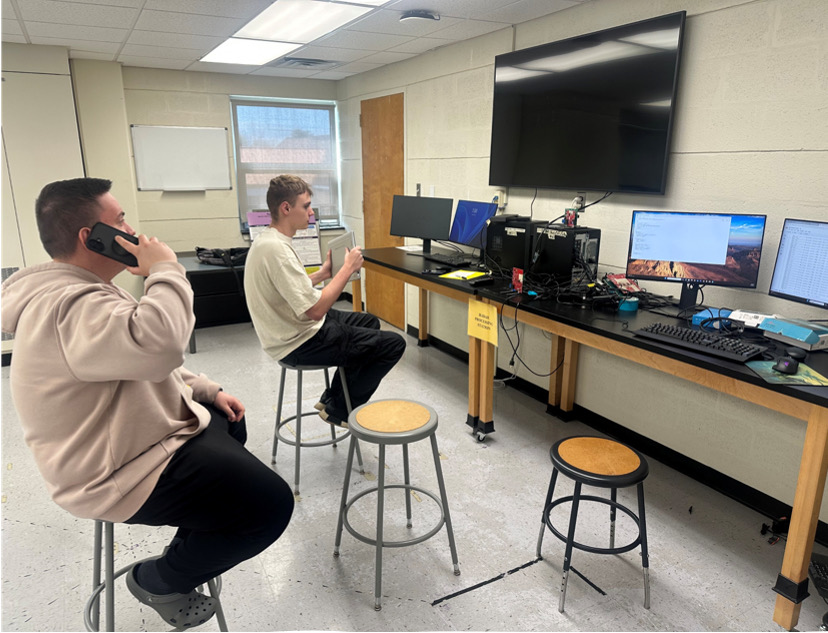 Walshaw’s work involves developing computer simulations to study how radar systems perform in the presence of interfering signals, similar to jammers. His research explores how artificial intelligence can identify the best antenna configurations to detect desired signals while minimizing interference. While traditional methods can involve demanding computational processes, the AI models are being trained to rapidly adapt radar configurations as interference conditions change.
The work is demanding but well worth it. “Troubleshooting the radar is not difficult, but it is very time consuming,” Walshaw said. “I’ve spent sometimes at least 10 hours troubleshooting a radar for one problem.” Still, he added, “when it works, it’s smooth sailing.”
Over the summer, Widener was awarded another grant from the NSF I-Corps program worth $50,000, which funded the customer discovery aspect of the research. While the initial $200,000 NSF grant supports fundamental research on AI-powered radar systems, adaptive antenna configurations and interference mitigation, the I-Corps program explores the commercial potential of radar-based monitoring technologies, particularly for helping older adults live independently and safely. Hamza and some of his students interviewed potential customers about whether they saw a need for this type of technology. The team conducted more than 100 interviews with older adults, their families, caregivers, senior living communities, health care providers and medical alert companies.
These conversations helped the researchers better understand the limitations of existing monitoring systems and identify opportunities for radar-based technologies that could improve safety while preserving independence and privacy.
Walshaw took part in the interviews in addition to his work on the technology. He and the team visited facilities across Pennsylvania and in New York and even got the chance to connect with an NSF program coordinator.
The interviews were new territory for Walshaw. “I learned a lot about talking to people,” he said. “I’m not very good at talking to people and – doing these cold starts – it really got me out of my comfort zone.”
The staffing shortage was the first thing Walshaw noticed. “You could kind of see the impact that you would have just by visiting the nursing homes,” he said. “A lot of them were understaffed.” The staff at these facilities were concerned about these shortages, and many of them saw the technology as a potential relief. “When we were interviewing people, they thought it could possibly take the burden off them,” Walshaw said.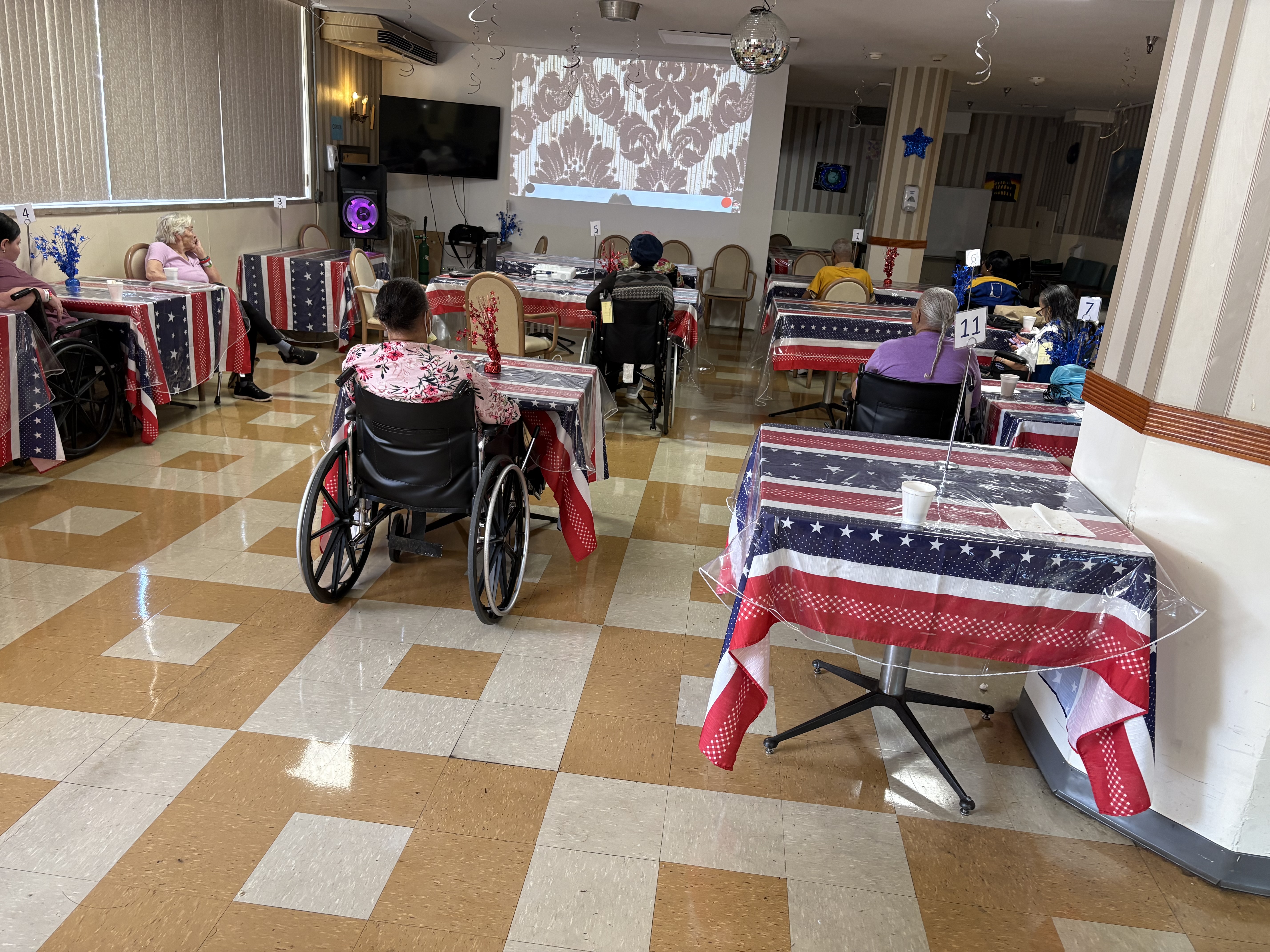
The second takeaway came from residents, particularly Judy Reed Green. Like many older adults, Reed Green values maintaining her independence while knowing that help will be available when needed. Her biggest concern was not whether help exists, but whether she could reach it when she was physically unable to request assistance.
“People care deeply about their elderly loved ones, and families especially want to be sure that if an incident happens, there’s an automatic, reliable detection system they can count on,” said Hamza.
Going out into the field to conduct the interviews provided a source of motivation for the team, especially Walshaw. “It helped me get motivation to do the work because you’re like, oh, I can actually impact a lot of people’s lives by doing this,” he said.
Walshaw said the experience showed him the value of going beyond the lab. “Going outside your comfort zone is very important,” he said. “If you do more than what you are supposed to do, only good things can come from it.”