From Spain to Chester: Exchange Student Balances Classes, Research and Cross-Country

Claudia Pedraza Perez, an exchange student from Spain, is learning the customs and culture of a new country while studying engineering, conducting research, and running cross-country, all at once.
Pedraza Perez is not new to studying abroad. She spent her third year at the University of Nantes in western France. Although she enjoyed the experience in France, she was permitted to stay only one year, so she began looking at other study abroad opportunities.
She eventually found the ISEP exchange program, an exchange program between colleges, along with a scholarship that covered the cost. She applied two years in a row and was selected the second time.
“I looked for different programs in places like Brazil and China, I never thought of studying in the United States until I found the ISEP scholarship,” she said.
Through the ISEP program, she had about 120 universities to choose from. She was looking for a school on the east or west coast and eventually narrowed it down to five options: San Diego State University, Virginia Tech University, University of Nebraska, University of North Carolina and Widener University.
“Widener was an option mainly because of its location close to Philadelphia, and the fact that it had a chemical engineering and physics program,” Pedraza said. “I wanted a college that offered both.”
She is one of five ISEP students at Widener this semester, including her roommate from South Korea and three students from Ireland.
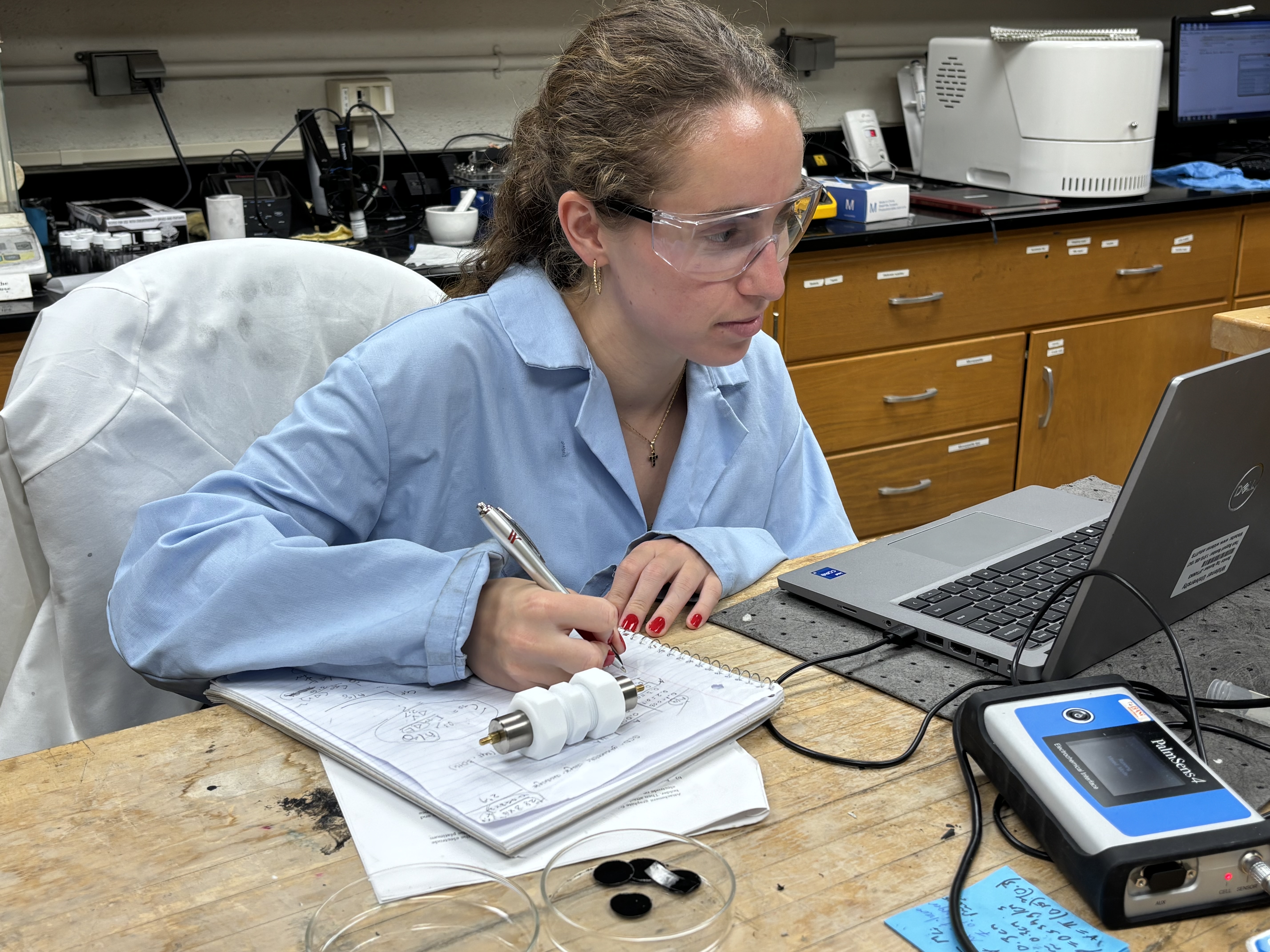
Back in southern Spain, Pedraza Perez is a senior at Universidad de Sevilla, double majoring in physics and materials engineering. At Widener, she is taking classes in civil, mechanical and chemical engineering. She is also working on a research project with Dipendu Saha, professor and chair of the chemical and materials engineering department.
Her research in the department of chemical and materials engineering focuses on turning sewage sludge, a waste that is usually burned, into porous carbon for supercapacitors. These are battery-like devices that charge and discharge very quickly, making them useful alongside batteries in many applications, such as in electric vehicles for acceleration and regenerative braking. By making carbon for supercapacitors from sewage sludge instead of traditional sources such as coconut shells or coal, her work explores a more sustainable way to reduce waste and support cleaner energy technologies.
Although she has studied abroad before, the differences between studying in France and the United States are dramatic. In France, she spent much of her time outside of the university, exploring the city and playing sports. In the United States, all of that is right on campus.
“The college experience in the U.S. is very different because everything happens on campus: sports, social life, community, etc.,” she said. “I really like that because you feel very much at home all the time and don’t need to move around much to find things to do.”
Her university back home in Spain was a public school, with about 70,000 students and classes of more than 80. At Widener, she has been in classes with as few as five students, where she can build a relationship with the professor to enhance her learning.
“I’m really glad I got to have this experience because it’s so different and everything is so new, I feel like I’m starting college all over again.”
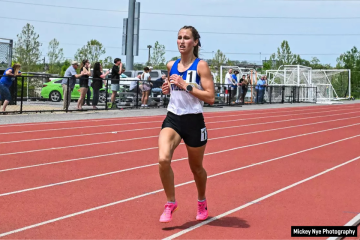
Her experience at Widener goes beyond the classroom, as she is a member of the women’s cross-country team.
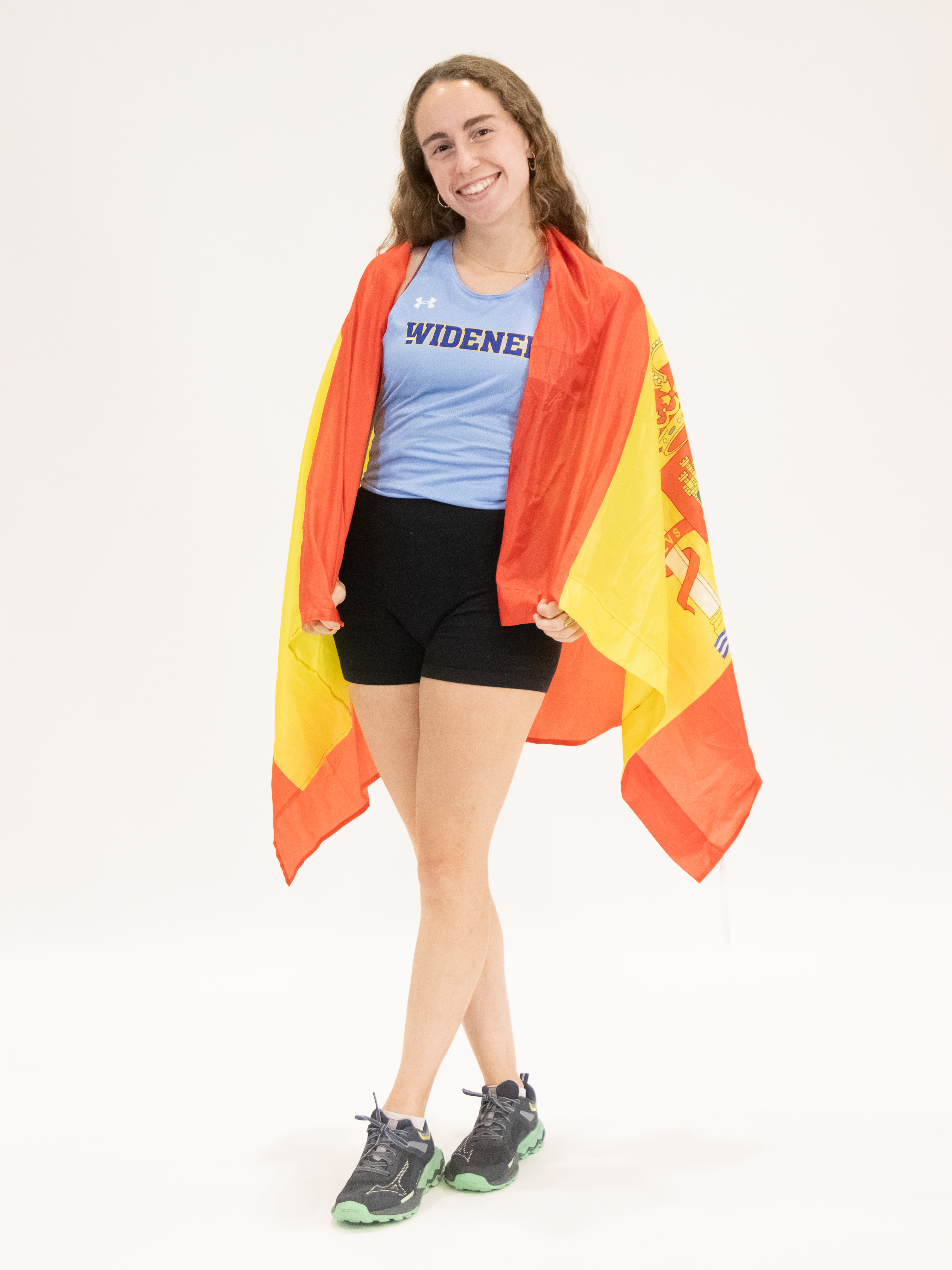
In Spain, college athletics are not as prevalent as they are in the United States. Pedraza Perez was a member of the volleyball team at her home university, but the team had no coach, no required practice and only about five to six games a semester.
She originally had no plans to participate in a collegiate sport, but during her first week on campus, Vince Touey, head men’s cross-country and track & field coach, spotted her running on campus and asked if she would be interested in joining the cross-country team. “I never would have thought of it, honestly,” she said.
She credits Widener’s flexible class schedule for giving her time to do it all. At home, she would have class from 9 a.m. to 2 p.m. every day, plus labs in the afternoon. At Widener, she has room for the two to three hours of practice while also furthering her education. “I am always into a million things,” she said. “I am kind of used to not having any free time.”
Pedraza Perez lives in Widener’s brand-new international house, where she gets to connect with people from a variety of different countries including Morocco, Ireland, Korea and the Ivory Coast.
“There is always something new to talk about,” she said.
She also has made time to explore the surrounding area, including Swarthmore and Philadelphia’s Magic Gardens. She also took a trip right down the road to a Philadelphia Union game where she was blown away by the atmosphere.
“I thought the anthem singer was only in the movies,” she said. “Even for someone who doesn’t enjoy soccer, the whole experience was so cool. It was worth it.”
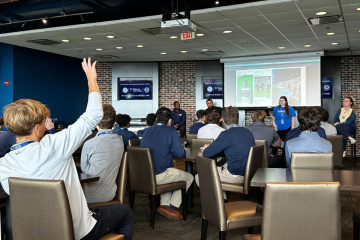
She was also impressed by the warm welcome she received when she arrived at the university, especially from the Widener International office.
“Ever since I got here, I've felt very welcome and integrated by everyone I've met. A special thank you to the members of the international team, especially Maddie (Becker), Jaylin Johnson and Michael Shaver, who have made sure we got the best experience possible and have shown us around since the very first day. It was very helpful, especially at the beginning, when I was really lost,” she said. “They have really taken care of us. They even hosted a watch party for an Eagles game in our house so we could learn about American football.”
That hands-on approach is deliberate. “We’re people first. We want our offices to always be a safe space for students,” said Madison Becker, study away coordinator for the Widener International office. Staff members go above and beyond to make these students feel like they belong, including making sure they have a ride to campus when they arrive.
“The very first thing we’re doing is we’re driving over to the airport and we’re picking them up,” Becker said.
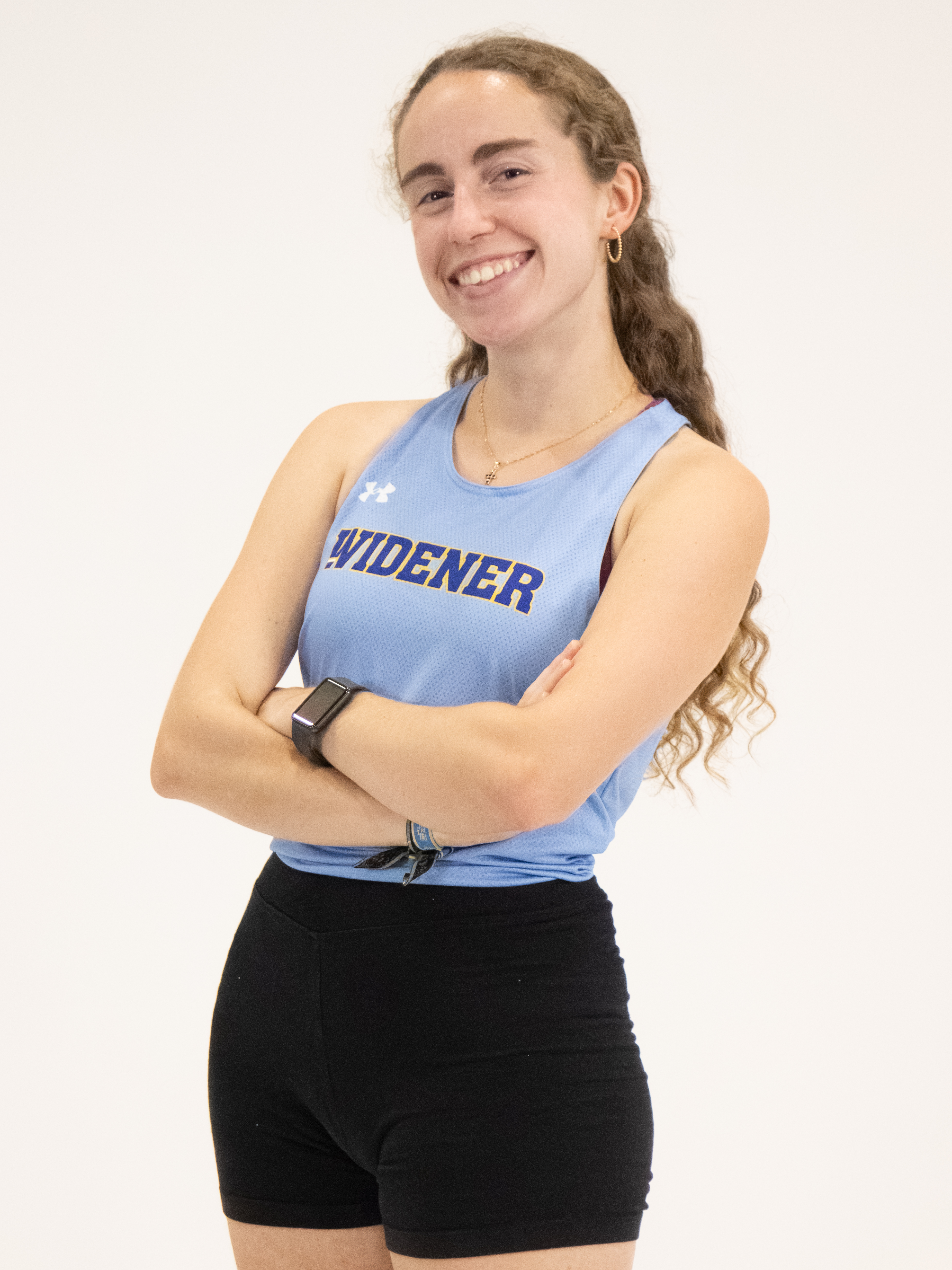
While Pedraza Perez’s semester at Widener will come to an end in December, she will take home a once-in-a-lifetime experience. What she will miss most when she departs is the friendliness of the Widener community.
“Maybe it’s because it’s a small college, but the people here are just so friendly. Someone you have never met before will walk up and say, ‘Hey, I like your hair,’ or ‘nice shoes,’ she said.
After she completes her studies at the Universidad de Sevilla, Pedraza Perez is looking to get into a career developing cancer treatment technology, such as radiotherapy machines and detection systems.
Her advice to anyone considering participating in an exchange program is simple.
“It teaches you a lot about yourself,” she said. “I found out I could adapt to a lot more change than I thought I could.”