

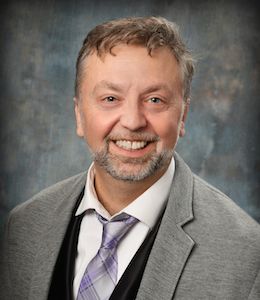
Brent A. Satterly, PhD, MSS, LCSW, CSE, CST
- Professor
Affiliated Programs
- Social Work (BSW)
- Social Work (MSW)
- Social Work (PhD)
- Human Sexuality Studies (MEd)
- Human Sexuality Studies (PhD)
- Human Sexuality Studies & Social Work (MEd or PhD & MSW Dual Degree)
- Human Sexuality Studies & Public Administration (MEd & MPA Dual Degree)
- Clinical Psychology & Human Sexuality Studies (PsyD & MEd Dual Degree)
- Gender, Women & Sexuality Studies (BA)
Education
- PhD, Human Sexuality Education (2004)
University of Pennsylvania (PA) - MSS, Social Work (1995)
Bryn Mawr College (PA)
About Me
My approach to teaching is best described as embracing an existentialist and social reconstructivist perspective, emphasizing respect for what each student brings to the classroom and students’ responsibility for their own learning. I employ experiential learning through the use of multiple interactive methods. These methods attempt to maximize learning potential, cater to disparate learning styles, and connect theory to practice. In my teaching at Widener, these methods have resulted in positive outcomes as measured by student course evaluations and verbal feedback.
I received my doctorate in education (human sexuality specialization with distinction) at the University of Pennsylvania in spring 2004. Much of my doctoral training focused on educational methods, particularly experiential learning, also known as active teaching, and maximizing student development in multiple domains while respecting that students learn differently.
Research Interests
I currently have three primary areas of ongoing research for publication and scholarship. These include: (1) sexual minority professional identity and development; (2) social work and human sexuality pedagogies; and (3) social work and human sexuality textbook efficacy.
As an offshoot from my dissertation, the professional development of sexual minorities in the field of social work continues to interest me greatly. My dissertation raised numerous questions about the role of oppression, social identity, and organizational culture as well as how these factors, among others, influence sexual minorities pursuing graduate level education and beyond. As a result, I continue to explore identity management within the context of applications to therapists and educators.
In light of my approach to pedagogy as an experiential educator, my respective fields of social work and human sexuality, and the institutional support of experiential learning in Widener University’s Strategic Plan. I am also passionate about studying the art and science of teaching.
Finally, I have recently co-authored a textbook book on sexuality and social work to be employed within the context of both social work and human sexuality classrooms. Analyzing the efficacy of the text will be a focus for some years ahead.
Media Expertise
- Human sexuality
- Gay, lesbian, bisexual, transgender issues (GLBT)
- Clinical care with survivors of childhood sexual abuse, HIV/AIDS, families of divorce, and alternative family systems
- Undergraduate social work program development
- Self-disclosure and professional identity management in social work
- Professional identity management
- Therapeutic relationships
- Experiential education and efficacy of experiential education
- Human sexuality education
- Faculty governance
- GLBT training with social work; suicide prevention
Publications
- Satterly, B. A. (2021). Sex-positive social work: A review. Journal of Teaching in Social Work. 41(1), 94-95, DOI: 10.1080/08841233.2021.1837557
- Satterly, B. A., & Ingersoll, T. S. (2020). Sexuality concepts for social workers (2nd ed.). San Diego: Cognella.
- Satterly, B. A., Cullen, J., & Dyson, D. A. (2018). The Intergenerational Mentoring Model: An alternative to traditional and reverse models of mentoring. Mentoring & Tutoring: Partnership in Learning, 26(4), 441-454. DOI: 10.1080/13611267.2018.1530172
- Turner, G., Vernacchio, A., & Satterly, B. A. (2018). Sexual justice is social justice: An activity to expand social work students understanding of sexual rights and injustices. Journal of Teaching in Social Work, 38(5). 504-521. DOI: 10.1080/08841233.2018.1523825
- Ingersoll, T. S., & Satterly, B. A. (2016). Sexuality concepts for social workers. San Diego, CA: Cognella.
- Satterly, B.A. (2007). The alternative lenses of assessment: Educating social workers about psychopathology. Journal of Teaching in Social Work, 27(3/4), 241–257.
- Satterly, B.A. (2007). The intention and reflection model of self-disclosure: Social work education for gay male student identity management. Journal of Social Work Education, 43(2), 187–204.
Professional Affiliations & Memberships
Association of Baccalaureate Social Work Program Directors (BPD); Council on Social Work Education (CSWE); American Association of Sexuality Educators, Counselors and Therapists (AASECT)
Awards
- The Schiller Prize, AASECT
- The Clarence R. Moll Professor of the Year Award, Widener University
- Phi Alpha, Widener University, Honorary Inductee
News
In the Media
- The Handbasket
Lose Yourself: Where Politics Meet Body Image
- The Chester Spirit
Widener prof wins Wollman Award for inclusion
Noteworthy
Faculty honored at 2026 awards event
Widener University recently honored faculty members for distinction in areas of civic engagement, institutional leadership, research, as well as innovative and distinguished teaching. Various faculty received awards at the ceremony, held Oct. 28 in the University Center on the Chester campus.
“The honorees we recognized this year reflect a standard of excellence that sets our Widener academic community apart,” said Provost Mark Nicosia. “Through devoted teaching, scholarship that makes a difference, community engagement and visionary leadership, they enhance the student experience and motivate those who work alongside them.”
The awards included:
- The Lindback distinguished teaching award, given to a faculty member who has exemplified a history of teaching at the highest level of distinction. It is endowed by the Christian R. and Mary F. Lindback Foundation, a Philadelphia-based foundation that provides grants to institutions of higher education for the promotion of excellence in teaching. The recipient was Associate Professor of Social Work Margo Campbell.
- The faculty award for civic engagement celebrates faculty members who have built meaningful, sustained partnerships with community organizations over multiple years, weaving real- world collaboration into their teaching, their research, or both. The award was shared this year by Erika M. Dawkins, assistant professor in the Institute for Graduate Clinical Psychology and Rebecca Vlam, assistant clinical professor in the Center for Social Work Education.
- The outstanding researcher award recognizes a faculty member who has participated in research and scholarship nationally or internationally, and made a significant contribution through their research, while advancing their profession or discipline as well as the university’s mission and vision. The recipient was Associate Professor of History Jordan B. Smith.
- The Fitz Dixon innovation in teaching award highlights an individual who has designed and assessed novel, transformative teaching practices and high-impact learning experiences that significantly elevate student outcomes. This award was presented to Assistant Professor of Economics Afrouz Jahromi.
- The faculty institutional leadership award recognizes faculty leaders who have championed major institutional initiatives, governance reforms or co-curricular programs that advance student success and strategic vision. This year’s award was shared by Associate Teaching Professor of Biomedical Engineering Ria Mazumder and Professor of Communication Studies and Digital Media Informatics Amy Franzini.
- The distinguished university professor designation is given for a three-year term to the rare faculty members who have achieved distinction across teaching, research, civic engagement, and institutional leadership simultaneously. The designation was awarded to Professor of Criminal Justice Shana Maier and Professor of Social Work Brent A. Satterly.
The photo shows, from left, Ria Mazumder, Shana Maier, Afrouz Jahromi, Amy Franzini, Jordan Smith, Brent Satterly, Rebecca Vlam, Erica Dawkins, Margo Campbell.
Share link: https://www.widener.edu/news/noteworthy/faculty-honored-2026-awards-event