Industry Growth
Employment of radiologic & MRI technologists is expected to increase by 6% by 2032, faster than the average for all occupations, according to the U.S. Bureau of Labor Statistics' Employment Projections.



Level up your career as a radiologic technologist by combining hands-on clinical training with the flexibility and innovation of an online Widener education.
Excited to join the Radiologic Technology program? Start your journey with the Pre-Medical Imaging program at Widener and earn the prerequisites for this program with ease!
Associate's
On Campus
12 Prerequisite Credits + 49 Program Credits
Our associate's degree in radiologic technology will ignite your career as an x-ray technologist.
After completing prerequisites courses 100% online, you'll begin 24 months of radiologic technology courses on Widener's Chester, PA campus. Supported by experienced professionals, you'll learn the basics of diagnostic and therapeutic equipment in state-of-the-art facilities.
This allied health program will prepare you for a career in diagnostic radiology in a hospital, private practice, public health, or military setting. You'll graduate a more confident healthcare professional, ready to sit for the American Registry of Radiologic Technologists (ARRT) certificate exam.

The radiologic technology program is proud to have an eight-year accreditation from the Joint Review Committee on Education in Radiologic Technology (JRCERT).
JRCERT Contact:
20 N. Wacker Drive, Suite 2850, Chicago, IL 60606-3182
Phone: (312) 704-5300; Fax: (312) 704-5304
E-mail: mail@jrcert.org; Web: www.jrcert.org
Before starting our radiologic technology program, you must complete 12 credits of prerequisite courses including math, English, humanities, and psychology/sociology. Once your prerequisites are fulfilled and you have been admitted into the program, you will complete core classes and clinical training in radiologic technology at Widener's Chester, PA campus.
You'll study the basics of anatomy and physiology and patient care, then practice those skills in supervised clinicals. As you advance into advanced imaging and special procedures, you'll also begin mock registry exam preparation.
View the Loading... for curriculum and coursework requirements.
The clinical education plan is divided into the following stages:
Semester I – Orientation Phase
This phase introduces the student to the radiology department, focusing mainly on getting the student acclimated to the functionality of the radiology department. Clinical instructors demonstrate use of equipment and performance of radiologic procedures. Students are required to meet the expectations of the room objective, evaluations, and competency tests during this phase of clinical education.
Semester II – Assistance Phase
This stage of clinical education requires that students increase their level of activity in the radiology department by assisting the technologists in the performance of studies. Students are applying learned skills to actual patient care situations by beginning to perform radiologic studies under the direct supervision of the staff radiographer. Students are required to meet the expectations of the room objective, evaluations, and competency tests during this second phase of clinical education.
Semester III – Performance Phase
This stage of clinical education expects that the student will be performing most radiologic studies either under the direct or indirect supervision of a staff radiographer, depending on proof of clinical competency. Students are exercising independent judgment and are completing requirements necessary to begin the last phase of clinical education. Students are required to meet the expectations of the room objective, evaluations, and competency tests during this third phase of clinical education.
Semester IV – Final Competency Phase
This phase of the clinical education process finds the student, having completed competency tests for all categories of radiologic studies, performing independently in the radiology department under the indirect supervision of a staff radiographer. Students must complete requirements for final competency, which is a reaffirmation of the student’s competency level. Students are required to meet the expectations of the room objective, evaluations, in addition to the final competency tests. Students must satisfactorily complete a critical thinking and problem-solving mock scenario. The students will be given specific circumstances in which they must adapt to complete the case.
Taught, learned, and assessed in: Semester I
Reassessed in: Semesters II, III, and IV
The student must demonstrate competency in the use of radiographic equipment before beginning to perform any radiographic procedure. This is accomplished in the following way:
Clinical instructors demonstrate the use of the radiographic equipment located in the assigned room using equipment competency checklists distributed to all students.
Students are required to practice using and moving radiographic equipment when the room is vacant.
Students will demonstrate competency in the use of radiographic equipment using the equipment competency checklist.
Students must perform all items on the equipment competency checklist to be considered competent in the use of radiographic equipment.
Students failing to perform all items on the competency checklist will meet with a clinical instructor. The clinical instructor will re-demonstrate the equipment with emphasis on areas of deficiency. Students will be given subsequent opportunities to demonstrate competency in the use of radiographic equipment during the first semester.
Assessed in: Semesters I, II, III, and IV
Students will demonstrate completion of each clinical assignment objective through the use of the Clinical Evaluation Form.
Distributed and assessed in: Semesters I, II, III, and IV
Staff radiographers evaluate students at the end of each scheduled room assignment. The evaluations are used to demonstrate the student’s cognitive, affective, and psychomotor performances in the clinical area. Evaluations correlate with the objectives and expectations for the first semester, specifically the students’ progress through the orientation phase of the clinical education plan.
The student will give their evaluation to their assigned staff radiographer. The staff radiographer will assess the student’s performance during the clinical rotation and submit the evaluation through the Trajecsys system.
Taught, learned, and assessed in: Semesters I and II
Clinical labs correlate with the Radiographic Procedures I & II classes. Upon completion of classroom instruction of a specific radiographic procedure, clinical instructors correlate the information with a clinical lab.
The following outlines the procedure for clinical correlation:
A specific radiographic procedure is taught in the classroom (e.g., Chest Radiography Lecture).
A clinical demonstration lab is presented to the class by a clinical instructor within two school days of the lecture.
The demonstration lab takes place in a radiographic room (e.g., Chest Radiography Demonstration Lab follows Chest Radiography Lecture).
Students are given printed step-by-step procedures indicating the correct way to perform the procedure.
Students are expected to take notes in their clinical books during the demonstration lab.
Students are encouraged to work with a clinical instructor as a follow-up if needed. Please see any instructor to schedule a session.
Unit tests are used as a clinical student assessment. Using the printed step-by-step procedure as the testing form, the student meets with a clinical instructor during a scheduled unit test. At this time, the student will simulate the performance of the radiographic procedures (e.g., Chest Radiography Unit Test).
Students must complete all Clinical Unit Tests with a minimum score of 85%.
Students who do not score a minimum grade of 85% for any radiographic procedure on the unit test will re-test on the procedure(s) to prove competency.
A form of remediation is given and must be passed for any individual failed projection.
If the student does not receive 85% competency on the retest, they must write out the failed viewed criteria according to the lab notes and retest to achieve clinical competency.
Achieving less than an 85% average on the entire unit test requires the student to perform each failed view at a minimum of 85% competency. In addition, the student may have to complete the corresponding unit in the Merrill’s workbook.
As with didactic unit tests, clinical unit tests assure continued proficiency in a content area.
Widener has established partnerships with select regional institutions that allow students to complete the clinical portion of their radiologic technology degree at Widener’s Chester, Pennsylvania campus. Students from the partner institutions listed below should consult their academic advisor regarding the radiologic technology curriculum:
Partner Institutions
Bloomsburg University
Gwynedd Mercy University
Immaculata University
Students entering the program from Gwynedd Mercy University, Bloomsburg University, or Immaculata University must meet all program requirements. Eligible students will:
Receive a certificate of completion from Widener University
Have radiology transcripts sent to their home institution
Be awarded their degree from their designated university
Students are encouraged to participate in graduation ceremonies at their home institution.
Distributed and assessed in: Semesters I, II, and III
Reassessed in: Semester IV
Competency testing is used to demonstrate that the student has achieved mastery of a radiographic procedure. Competency testing allows the student to move from direct clinical supervision to indirect clinical supervision. Competency testing is performed on actual patients in the department of radiography and must occur in the presence of a clinical instructor/preceptor or staff radiographer.
A copy of the testing tool used to document clinical competency is distributed to all students. Students must document completion of lecture, demonstration lab, and practice before attempting a clinical competency test.
Total Clinical Competencies Required: 41
Eleven (11) competency tests in Semester I
Thirteen (13) competency tests in Semester II
Eleven (11) competency tests in Semester III
Six (6) competency tests in Semester IV
Final competency testing is performed in the last semester of the program and is a reaffirmation of the student’s competence. A list of required final competency exams is distributed to all students.
1st Semester: Eleven (11) competency studies with a minimum grade of 85%
2nd Semester: Thirteen (13) additional competency studies with a minimum grade of 85%
3rd Semester: Eleven (11) additional competency studies with a minimum grade of 85%
4th Semester: Six (5–6) specified competency studies with a minimum grade of 85%
Students are graded on their clinical performance. Clinical grades are recorded on the student report card at the end of each semester. Students must maintain a minimum grade of 85% for all clinical work.
Clinical Grade Calculation
Semester I
Clinical Evaluation Average — 15%
Unit Test Average — 25%
Competency Test Average — 60%
Semester II
Clinical Evaluation Average — 15%
Unit Test Average — 25%
Competency Test Average — 60%
Semester III
Clinical Evaluation Average — 15%
Unit Test Average — 25%
Competency Test Average — 60%
Semester IV (Senior Final Competency)
Clinical Evaluation Average — 20%
Trauma/Live Competency Test Average — 30%
Film Critique Competency Test Average — 25% (incorporated in Senior Review Class)
Critical Thinking Scenarios — 25%
Students will receive mid-semester and/or mid-course grades after the 13th week of each semester. Final grades will be available on Widener’s website once submitted by the Program Director. Grades for all completed courses will also be issued to students in hard copy.
The following percentages reflect the program’s minimum passing standards:
Minimum passing grade for a single course: 75%
Minimum passing overall semester average: 75%
Minimum passing grade for clinical education: 85%
Grades are recorded as numerical averages and may include all or a combination of the following components:
Examinations
Tests
Quizzes
Class participation
Homework
Each instructor determines the final grade calculation for their course. A detailed breakdown of grade composition, along with the course syllabus, will be distributed to students at the start of each class.
Remediation opportunities will be provided for incomplete or failed coursework. All remediation practices:
Are determined through peer review
Are clearly outlined and published in the course syllabus
Are presented to students at the beginning of each class
The Advisory Committee will review cases involving chronic incomplete or failed coursework.
94–100% — A
87–93% — B
81–86% — C
75–80% — D
Below 75% — F
I. Purpose
To inform students of all requirements necessary for graduation from the Radiography Program.
II. Policy
All students must complete all program requirements to be eligible for graduation.
III. Procedure
Students must:
Complete all published academic requirements with a minimum grade of 75%
Complete all published clinical requirements with a minimum grade of 85%
Refer to the Student Handbook for published academic and clinical requirements
Have no outstanding tuition or fees
Return all school property, including:
ID badges
Lead markers
Radiation badges
Fulfill all published academic requirements with Widener University and/or any institution articulated with the Widener Allied Health Program to receive academic credit toward the specified degree, including passing UCS 200 and UCS 102 or UCS 101
Completion of these requirements renders the student eligible for graduation and the ARRT registry examination.
Eligible students will receive:
Certificate of Completion in Radiologic Technology from the Widener University Allied Health Program
Associate of Science Degree in Allied Health from Widener University
I. Purpose
To inform students of the availability and procedure for due process.
II. Policy
Students may pursue due process if they believe a decision related to probation, suspension, or dismissal is unfair or based on inaccurate information.
III. Procedure
Within 2–5 days, the student should first discuss the concern with the individual who issued the original decision.
If unresolved, the student must submit a written request within 5 days to meet with the Program Director.
The Program Director will investigate and issue a decision within 15 days.
If dissatisfaction remains, the student may submit a written request within 5 days for a formal meeting with the Advisory Committee.
The formal meeting will occur within 15 days of the request.
Students will receive 8–10 days’ notice of the meeting date, time, and location.
Both the student and program representatives will present evidence supporting their perspectives.
The Advisory Committee’s decision will:
Be based solely on evidence presented
Include a written summary and rationale within 5 days
Be delivered to the student within 30 days of the meeting
If the student remains dissatisfied, they may submit a written appeal within 10 days to an external authority to ensure fair and impartial review.
This Widener allied health program is committed to quality health services for its community.
Through a cooperative effort of the faculty and imaging staff, the program provides a quality education in radiologic technology for individuals in the community.
Through a structured and integrated curriculum, the program equips student radiographers with the knowledge and skills needed to be valuable partners in the healthcare team and to successfully meet present and future challenges.
Goal 1: Graduates/Students will demonstrate clinical competence in radiologic technology
Student Learning Outcomes:
Demonstrate appropriate radiation safety principles
Competently operate radiographic equipment
Provide safe, effective, and compassionate patient care
Apply proper positioning techniques to produce optimal radiographic images
Adjust radiographic technical factors to produce high-quality radiographs
Goal 2: Graduates/Students will employ effective critical thinking skills
Student Learning Outcomes:
Interpret patient needs and implement appropriate modifications in a variety of clinical situations
Gather, analyze, and evaluate data to reach well-reasoned conclusions that consider realistic implications and consequences
Goal 3: Graduates/Students will develop the professional characteristics of a healthcare practitioner
Student Learning Outcomes:
Adhere to patient confidentiality policies
Demonstrate professionalism in the clinical setting
Engage in ongoing professional growth and development activities
Goal 4: Graduates/Students will employ effective communication skills
Student Learning Outcomes:
Practice effective oral and written communication skills
Continually refine communication skills to successfully interact with patients, peers, and healthcare team members
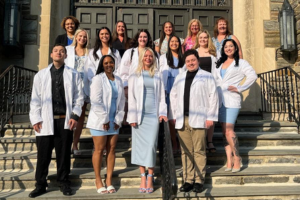
The flexible hybrid format of the associate's in radiologic technology allows you to meet your career goals while balancing a busy schedule. Complete your pre-req and degree program courses completely online, then receive the hands-on training you need to succeed.
With Widener’s excellent educational resources and hands-on training at our Chester, PA campus, it’s never been easier to take charge of your education and your future.

Your education will stretch beyond the classroom as you build relationships with driven classmates, engaged alumni, and expert faculty and clinicians who are experienced professionals within allied health fields. In small classes, you'll find an individualized and engaged learning model that supports your success—in fact, we have a 92% first-time pass rate for certification boards.
As you get to know these diverse industry insiders, you'll create a meaningful network of connections that will follow you long after graduation.
I enjoy teaching students and seeing how they evolve from the day they enter the program, to the day I'm handing them their diploma. It is fulfilling seeing how proud they are of their accomplishments.
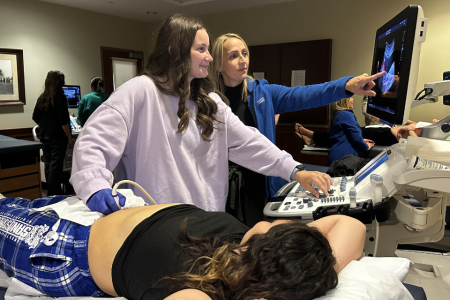
One year after the closure of Crozer-Chester Medical Center, the Diagnostic Medical Sonography and Radiologic Technology programs are thriving in their new home on Widener’s Chester campus.
Our admissions and financial aid teams are here to support you every step of the way. Have a question? Ask away!
Admission to this program is highly competitive. Strong performance in math and science high school and college courses, earning A or B grades, is strongly preferred. If possible, we encourage students to take additional in-person courses in subjects like Biology, Chemistry and Physics to strengthen their application. Applicants may contact program director Judith E. Crampton for more information.
The following are not required for admission to this program:
Completed application to Widener University by the applicable deadline:
Widener University serves as a "second home" for students from around the world.
Want to know what it's like to be an international student or need assistance navigating English proficiency requirements? We're here to help, and our international admissions director will support you through the application process.
This support doesn't end with admissions—our International Student Support team will serve as a valuable resource throughout your Widener journey.
Please note: Visa and financial aid are not available for international undergraduate students in hybrid programs. To be admitted to an undergraduate or graduate program, you must meet the English language proficiency requirements, unless you are from a TOEFL-exempt country. Students educated outside the U.S. must have their transcripts evaluated to the U.S. equivalent.
After acceptance and prior to the first day of classes, students are required to maintain their own medical insurance coverage and complete the following requirements:
Required Documentation and Clearances
Completed physical examination with drug screening
Criminal background check (FBI fingerprinting) and Child Abuse History Clearance, in accordance with Pennsylvania state law
Please note: a prior criminal record does not automatically disqualify a student from admission to the program.
Valid driver’s license
Immunizations and Health Requirements
COVID-19 vaccination
Annual flu vaccine
Required immunizations, including annual PPD, MMR, Tdap, and Varicella
Respiratory FIT testing
Health Insurance
Widener University offers a health insurance plan to full-time undergraduate students enrolled in 12 or more credits. Certain graduate students in clinical programs may also be eligible.
Widener University also partners with many local organizations and corporations to offer discounted tuition and other incentives to their employees. Don't see your company on the list? Ask them to become a partner. In addition, employers often offer educational reimbursement benefits. We encourage you to explore these opportunities and will be glad to provide any necessary documentation.
If you graduated with a degree from Widener, you may qualify for a 20% tuition discount. The first step to see what you qualify for is to submit your application. Widener offers students many paths to savings, and while we don't offer "double discounts", we'll make sure you'll get the biggest financial benefit you're eligible for. Only students who have completed an associate's, bachelor's, master's, or doctoral degree are eligible. Students who have pursued a 4+1, 4+2, or 3+3 pathway, graduate assistantship, Widener-funded scholarship, or other tuition discount may not be eligible if the financial discount granted surpasses 20%.
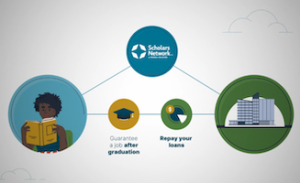
Through a partnership with Scholars Network, eligible students pursuing a career in health care can earn up to $65,000 in student loan repayment by committing to a full-time, 2-3 year position with a Scholars Network partner following graduation and licensure.
This program offers flexibility and choice—you can explore opportunities with leading health systems and select the location, benefits, and professional experience that best align with your goals.
Learn more about Scholars Network
Students are required to purchase or pay for the following items and fees:
Required textbooks (approximately $1,300), as well as notebooks, pens, pencils, and other stationery supplies
Uniforms, shoes, and lab coat (approximately $400–$500), in accordance with the school dress code
Replacement lead markers (if necessary): $20–$25
Campus parking fee: $150 per year (6:00 a.m.–12:00 a.m.)
Laptop and home printer: Students are encouraged to have access to both
Professional membership: Students are strongly encouraged to join radiology professional societies, such as the ASRT
Widener University technology fees: Based on credits each semester
Graduation fee: $90 (upon petitioning to graduate)
Capstone and UCS courses: $612 per credit (additional online courses taught by Widener University)
Trajecsys or E-Value system: $150 for two years (mandatory for each student)
Additional student-responsibility expenses include:
Drug screening and titers (if needed): Student is responsible for payment
Required immunizations, including:
Annual flu vaccine
COVID-19 series
MMR
TDAP
Varicella
Annual PPD
Respiratory fit test
Background check, child abuse clearance, and fingerprinting: Student is responsible for payment
Hyatt Hall
1 University Place
Chester, PA 19013
Hyatt Hall